Thinking of natural spaces as spaces for creation and artistic experience is the main objective of A Defesa da Natureza (The Defense of Nature). Developed by BoCA since 2021, this project brings local and artistic communities together, calling on them to contribute to a forest of works of art.
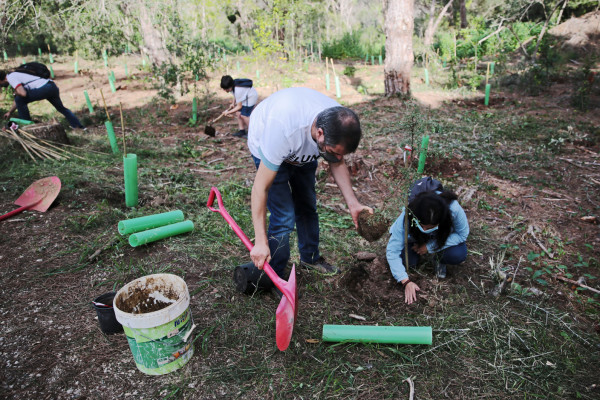
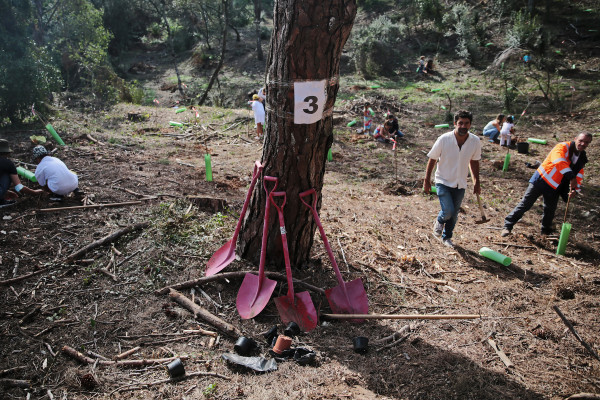
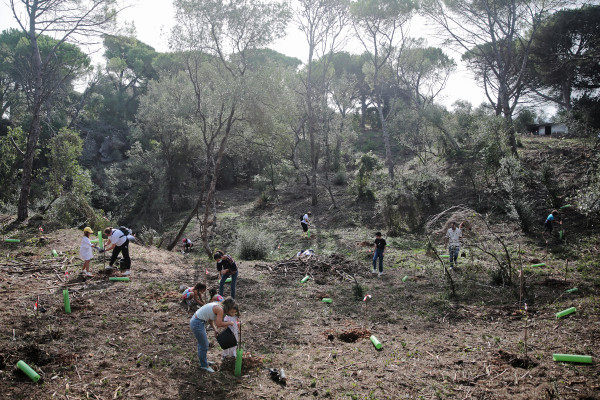
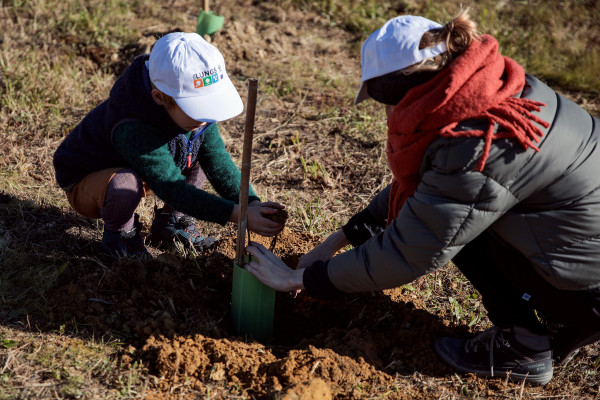
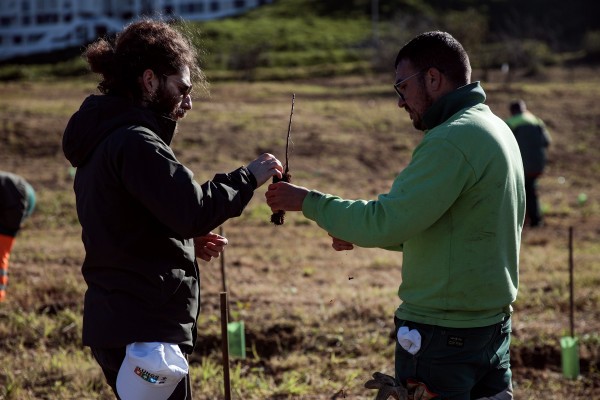
After taking root in other Portuguese cities, the participatory project A Defesa da Natureza (Defense of Nature) was in Lisbon for several planting sessions in partnership with the Lisbon City Council. After passing through Monsanto and Largo do Broma, a total of 450 oak, arbutus, and rosemary trees were planted in the Vale de Chelas. We had already been there in 2021 for an inaugural planting, and in 2022, when 122 participants rolled up their sleeves to plant 580 specimens (including cork oaks, holm oaks, almond trees, carob trees, and wild pear trees).
As part of the reforestation program for this natural area, mainly native species have been planted, such as oak, chestnut, maple, hazel, wild apple, wild cherry, birch, arbutus, laurel, and holly trees.
Following Joseph Beuys’ idea that anyone can be an artist, the art of generating life is embodied in the ecological gesture of planting a tree. In these plantations, each person is invited to give their tree a title, treating it as an artistic creation.
ON THE DEFENSE OF NATURE
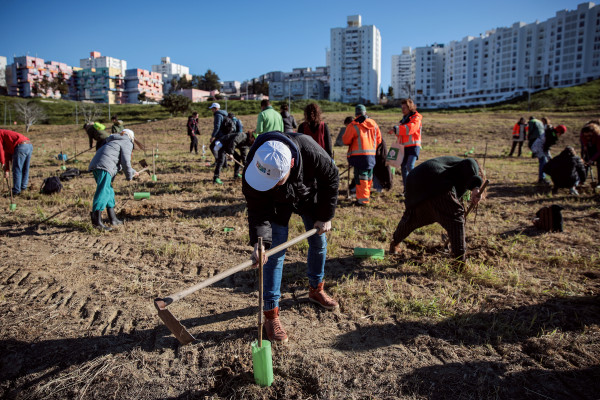
A participatory project conceived ten years ago through which BoCA combines artistic creation and programming with the planting of trees in natural spaces. Created in 2021, “A Defesa da Natureza” (The Defense of Nature) comprises: on the one hand, the planting of native plant species in different municipalities across the country to build a “forest of works of art”; on the other hand, inviting artists from different artistic fields to create performances in natural spaces through the cycle “Quero Ver as Minhas Montanhas” (I Want to See My Mountains).
Based on the legacy of “7,000 Oaks” by Joseph Beuys, a key figure in ecological art, BoCA designs a sustainable plantation involving the collaboration of artists and the local population. By creating a direct correspondence between generating (natural) life and generating (artistic) life, each plantation establishes an integrated concept that unifies the natural and the artistic, in a combination of art and environment, biodiversity and sustainability.


