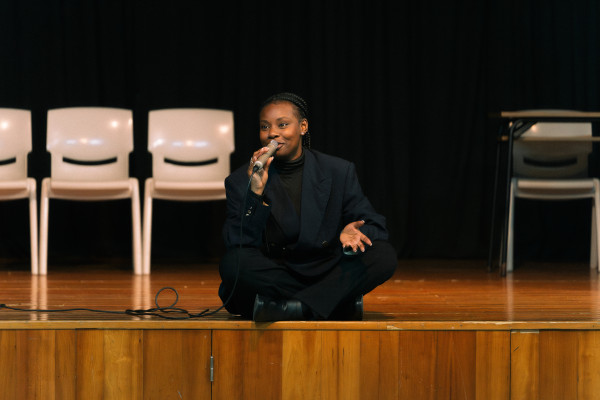
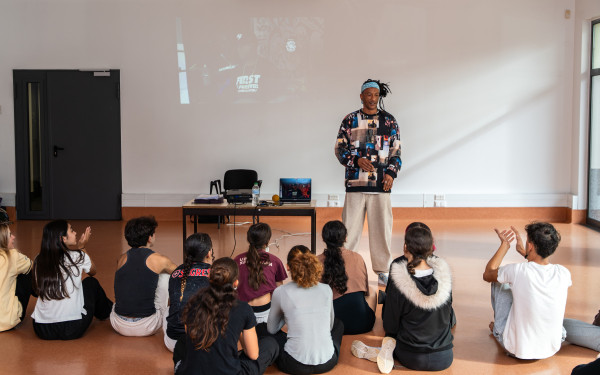
In the workshop “Songs in the Huni Kuin Worldview,” the Huni Kuin collective offers an immersive experience related to the musical culture of their people, considering the voice and melody as vehicles and instruments for acting in the world, building bodies, and living well.
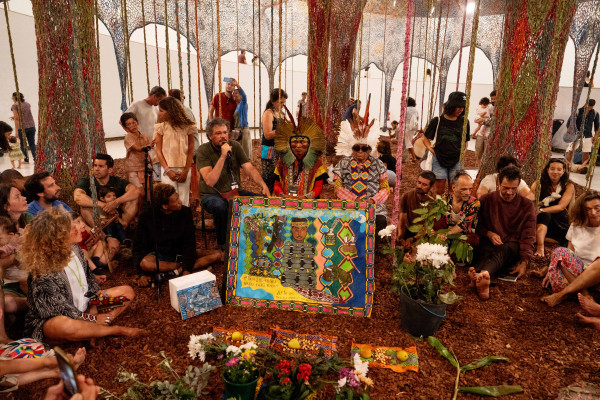
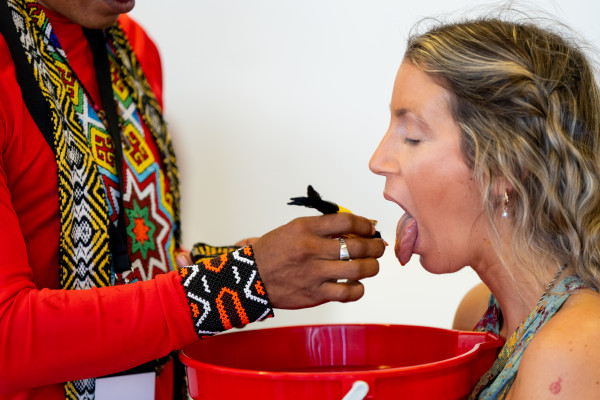
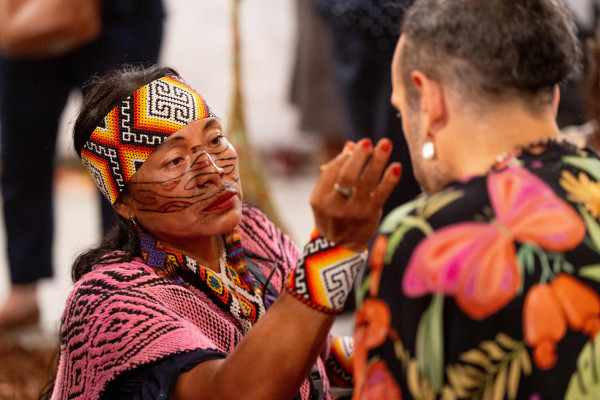
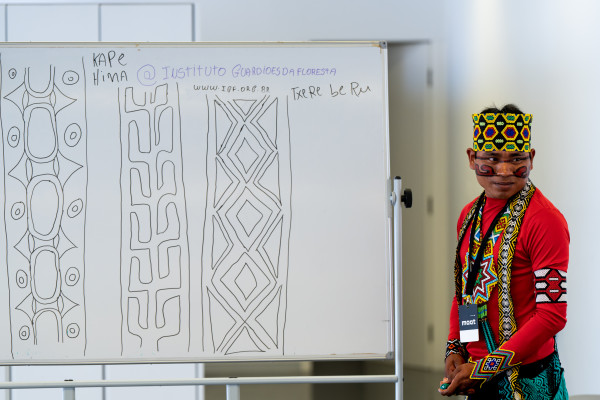
In the Huni Kuin worldview, the effectiveness of medicine, rituals, or food is closely associated with the strength of the “performer,” who sings different songs while evoking specific plants, stories, and existences in each use.
In this workshop, the Huni Kuin indigenous collective proposes an immersive experience related to the musical culture of their people, thinking of the voice and melody as vehicles and instruments for acting in the world, constituting bodies, and living well. Starting from a theoretical contextualization of this traditional practice, the group invites participants to integrate the Hampaya ritual, a rite for the initiation of artists in traditional songs.
In a model adapted for introducing this practice to non-indigenous people and other communities, it is proposed to begin with the pepper test—a method for “opening” the voice—and with the Txaná—a bird that imitates the song of all other birds, so that it helps each person to sing, speak, and express their own art.
Mediation, Research, and Production
Rodrigo Moreiras
Rodrigo Moreiras holds a degree in psychology from PUC-Rio and a master’s degree in archaeology from the National Museum of Rio de Janeiro. He has been working with the Huni Kuin people for 16 years, through projects focused on indigenous health, financial autonomy, infrastructure, ethno-tourism, and cultural exchange. He is the founder of the Guardiões Huni Kuin collective in Rio de Janeiro and the Instituto Guardiões da Floresta, where he serves as scientific director, organizes cultural exchange experiences in different countries, and coordinates the Expedição Huni Kuin project. He also works clinically, relating his knowledge of psychology to the knowledge of indigenous peoples in different individual and collective therapeutic processes.
Mariana Carvalho
Mariana Carvalho is a cultural producer and educator, with research in indigenous education, from Cândido Mendes University in Rio de Janeiro. She has been working with the Huni Kuin people for 16 years through projects related to indigenous education, cultural exchanges, infrastructure, and financial autonomy. She is the founder of the Guardiões Huni Kuin collective in Rio de Janeiro and the Guardiões da Floresta Institute, where she serves as vice president, coordinates the institute’s cultural exchange program, the Huni Kuin Expedition project, and cooperates to improve infrastructure conditions in the villages of the Rio Jordão indigenous land.
Consulting, Mediation, and Curation
Ana Rocha
Ana Rocha, choreographer, curator, and performer, has been working in cultural and arts mediation for 23 years. Ana operates in fields of cultural multiplicity and diversity, connecting points of reflection and transition through monitoring and consulting for institutions, non-profit organizations, artistic collectives, and national and international creators. She has a degree in Visual Arts and Art History and is a doctoral candidate in Human Ecology at Universidade Nova de Lisboa.
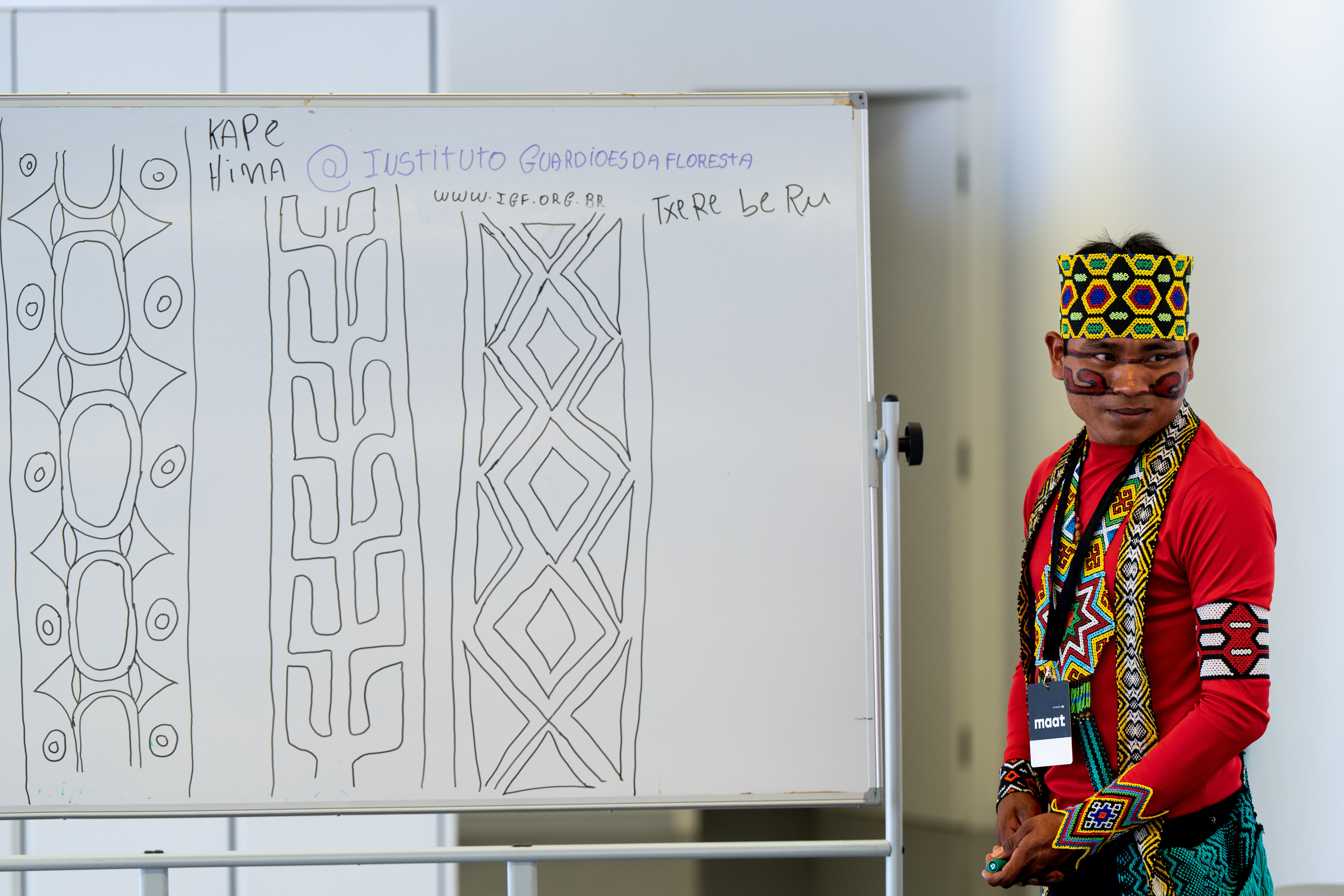
Biography
Zenira Neshane Huni Kuin
Zenira Neshane is the daughter of Maria Sabino Huni Kuin and Sabino Ixã Huni Kuin, two important leaders of the Huni Kuin people. From an early age, Neshane learned from her mother about handicrafts, graphic design, cooking, and the knowledge of women within the tradition of her people. In addition to being a teacher and artisan, she is one of the few Huni Kuin women recognized as a “shaman,” as she has extensive knowledge of her people’s traditional medicine practices. Neshane is also a pioneer of the Huni Kuin feminist movement, being one of the first women from her indigenous land to leave the territory, conducting workshops and cultural exchange activities in different states of Brazil and abroad.
Sabino Two Owls
Sabino Dua Ixã is a Huni Kuin elder who acts as a political and spiritual leader. He lived and worked in the rubber plantation, actively participated in the struggle for the demarcation of his lands, and studied with great shamans to become one of the greatest masters of Huni Meka (ceremonial songs) of the Huni Kuin people. Sabino lives with his entire family in one of the most remote villages of the Upper Jordan River, a place where very few consumer goods from the city arrive and where a deep connection with the land is maintained.
What is Nixiwaka?
Txaná Nixiwaka Huni Kuin belongs to a young generation of Txanás, or shaman artists, from the most remote village on the Jordan River. Since childhood, he has devoted himself to studying traditional songs, painting, and drawings related to his people’s traditions. He is married to one of the granddaughters of Sabino Dua Ixã, his teacher, who invited him to leave his village for the first time to represent his community.