Volmir Cordeiro
Rua – Braga, Lisboa
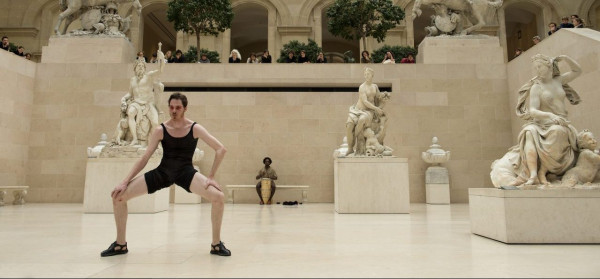
In “Rua”, Volmir manifests in the different bodies and faces the street might contain. The space which is drifted and crossed by the dancer’s redesigning by movement converts in an open abstraction, as the performer condenses in his body the diverse characters of the urban fauna, the ones most marginalized. A choreographic answer to the reading of the war poems of Bertolt Brecht, “Rua” instills a dance of thought and body, densifying the space, inhabiting a thousand ghosts.
Gabriel Ferrandini
Rosa. Espinho. Dureza
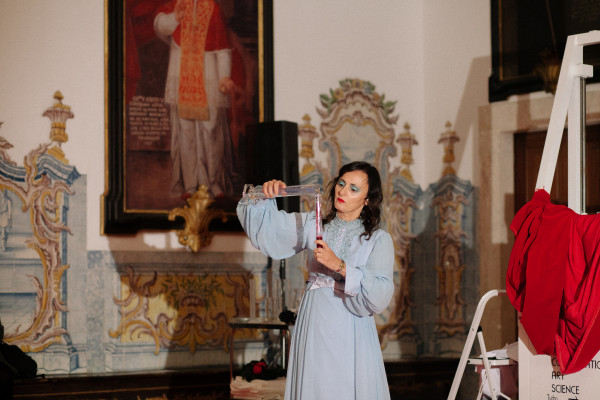
Under an invitation by BoCA, the drummer Gabriel Ferrandini conceives his first stage creation, sharing the stage with the actor Frederico Barata. “Rosa. Espinho. Dureza.” is made out of three acts: labour, sex, love. As a triptych, in which concepts and materials are interlinked, each act will have an action and object represent its respective “problem”, repeated ad nauseam, testing the persistence and concentration of the performers and the audience.

Ola Maciejewska
Bombyx Mori
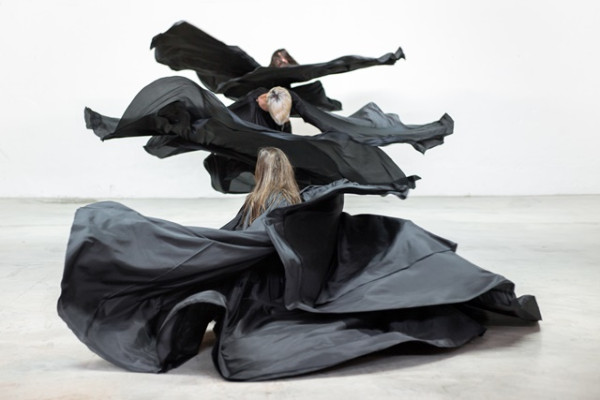
Ola Maciejewska draws inspiration from Loïe Fuller’s “Serpentine Dance.” She explores the relationship in the arts between human beings and physical matter, creating movement in large pieces of black fabric. Here, the natural body and the artificial process are inextricably linked: a poignant metaphor for a sculptural interpretation, exploring the relationship between the body and the artifact, in a frenzied and constantly dizzying way, where the hybrid nature of things is revealed.
Paulo Castro
Hello My Name Is
“Hello My Name Is” is a one-man show. In this one-man show, actor Rashidi Edward gives a powerful performance as a man who takes on multiple roles—he is the person mourning someone who has been murdered, only to then become the soldier who shoots to kill—using Edward Bond’s poetic language to draw attention to the place each person occupies in the dynamics of tyrannical power games.
Angélica Liddell
Lo Frío y lo Cruel
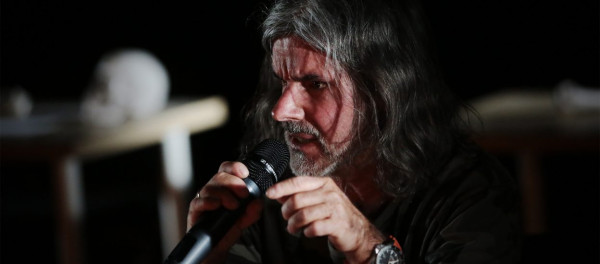
In the world premiere of her new creation, Angélica Liddell draws on the narratives of Sacher-Masoch and the Marquis de Sade, as well as Gilles Deleuze’s text “The Cold and the Cruel” (1967). Liddell focuses on the literary and artistic aspects of perversions, far removed from any clinical explanation, highlighting poetic expression that transcends all boundaries and artistic disciplines to present the relationship between father and daughter.