Tânia Carvalho
Duploc Barulin
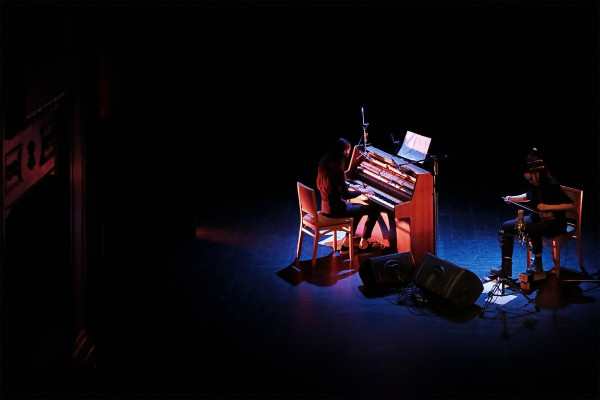
After presenting an exhibition of drawings at BoCA in 2017, “Toledo,” this time we get to know another artistic expression, Tânia in concert. This is where she explores the creative possibilities of the instrument, in a concert where, for the first time, she is also composing music for another performer, André Santos, who joins her on the piano. The lyrics are her own or texts by Fernando Pessoa.
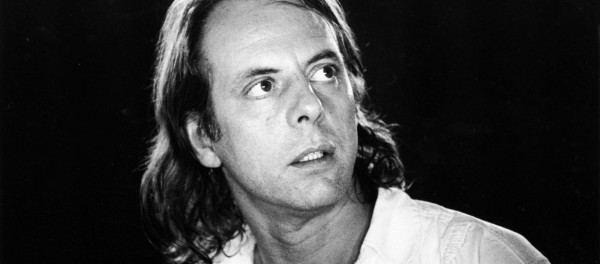
Karlheinz Stockhausen
Stimmung by Stockhausen
“Stimmung” (1968) is one of the most notable and fundamental works from Stockhausen, one of the greatest composers of the 20th century. Conceived for six solo voices, the work is now displaced in a response to its radicalism and its sense of religion to one of the temples of our contemporaneity, a nightclub (Lux Frágil), in the context of BoCA.
Linn’s first LP gains its title of “Pajubá” after the dialect spoken by the gay community and its supporters in Rio de Janeiro. The name comes from the African languages and has begun being used by the transvestites of Rio as a form of survival against the violence on the streets. With lyrical and incisive power, frequently humorous, she approaches topics such as violence, poverty, body politics, sex, desire and the daily struggles of Brazilian trans women.

Caterina Barbieri
Caterina Barbieri
Caterina Barbieri’s music has its origins on the meditation over primary waves and the polyrhythmic dance of harmonics. Her algorithmic approach to composition rooted in minimalism and Indian tradition, as well as her pragmatic attitude towards sequencing, unfolds in audible images that are surprisingly organic and almost tangible, to which she refers as “ecstatic computation”.