Artist Jonathas de Andrade uses photography, installation, and video to traverse collective memory and history, employing strategies that blend fiction and reality. His work discusses the failure of utopias, ideals, and world projects, especially in the Latin American context, speculating on its late modernity. In his work, emotions that oscillate between nostalgia, eroticism, and historical and political criticism are used to address themes such as the universe of work and the worker, and the identity of the contemporary subject, almost always represented by the male body.
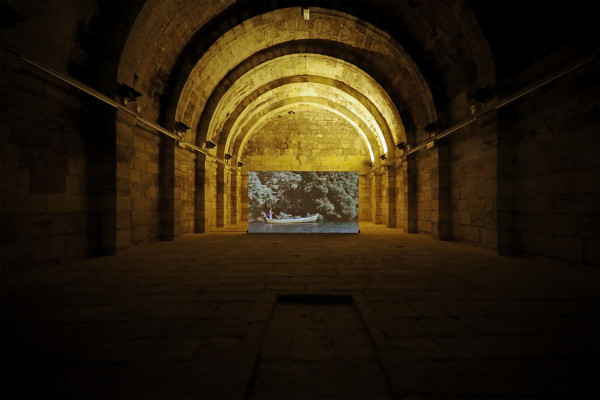
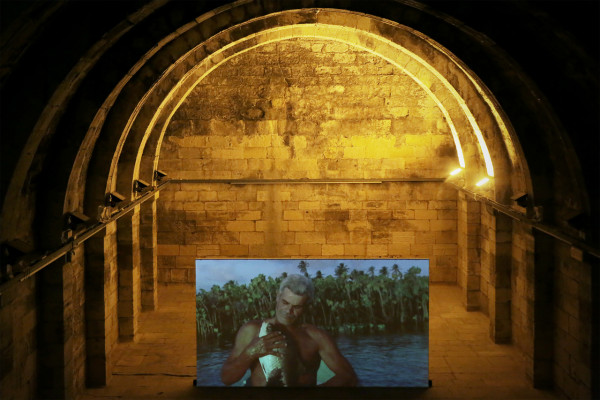
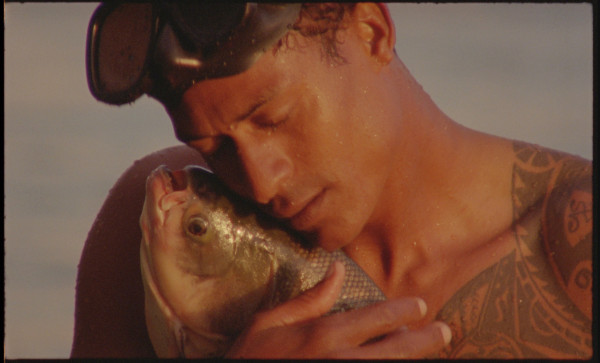
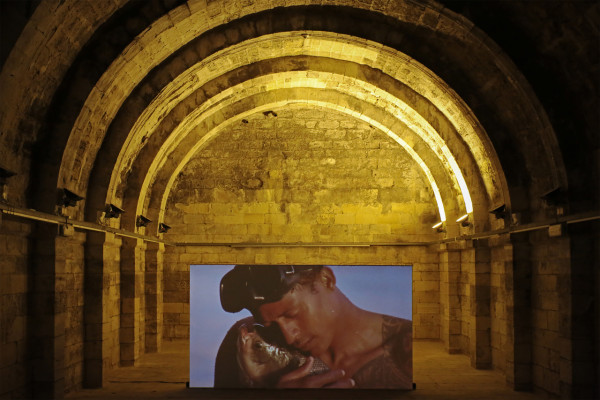
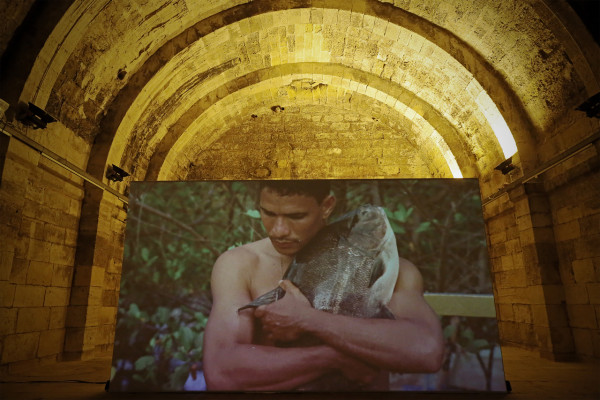
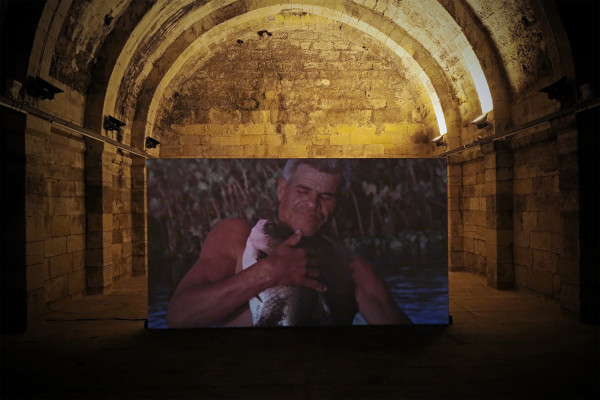
In the film “O Peixe” (The Fish), a fishing village stages a kind of ritual: they hold the fish in their arms until the moment of death. An extreme embrace—a rite of passage—where man resumes his condition as a species and, eye to eye with his prey, calms it through an ambiguous sequence of gestures: affection, solidarity, and violence. An embrace between predator and prey, between life and death, between the worker and the fruit of his labor, in which the gaze—of the fisherman, the fish, the camera, and the viewer—plays a crucial role. Situated in a hybrid territory between documentary and fiction, the work dialogues with the ethnographic tradition of audiovisual media.
O Peixe (The Fish), Jonathas de Andrade
37’, 16mm transferred to HD video, Sound 5.1, 16:9 (1.77)
2016
Courtesy of Galeria Vermelho, Galleria Continua, Alexander & Bonin