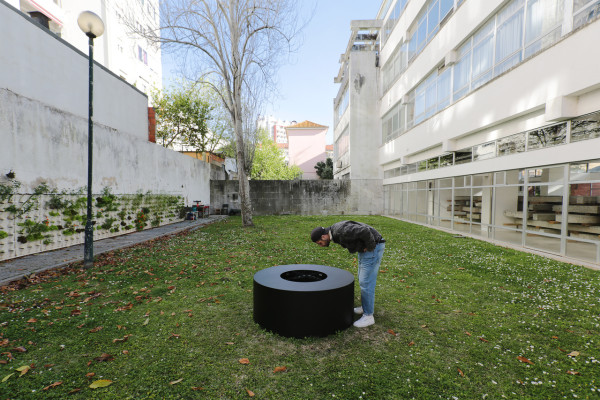
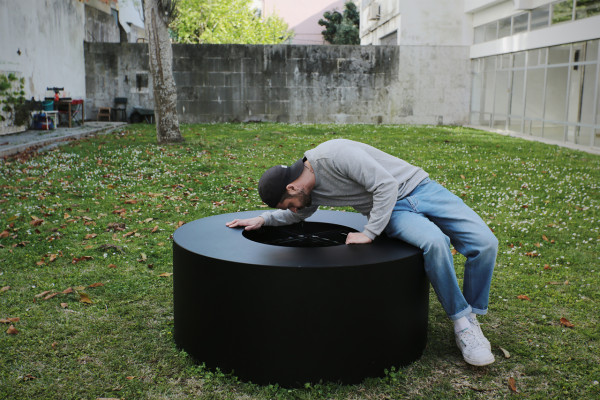
Tania Bruguera is back in Portugal with her powerful artistic activism, confronting “the role of emotions in politics” in this creative gesture. Her main concerns are institutional power, borders, and migration. Her work encompasses performance, events, film, installation, sculpture, writing, and teaching, as well as site-specific works. For Bruguera, art is not a neutral act; she proposes changes, including social and political ones, sometimes radical, through her creations. Bruguera calls this approach Useful Art, in which people are involved as participants rather than mere spectators.
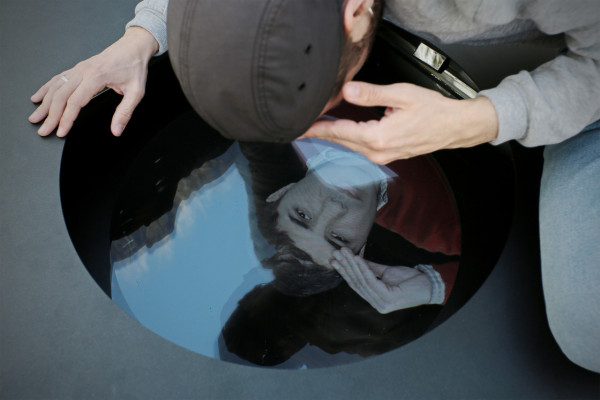
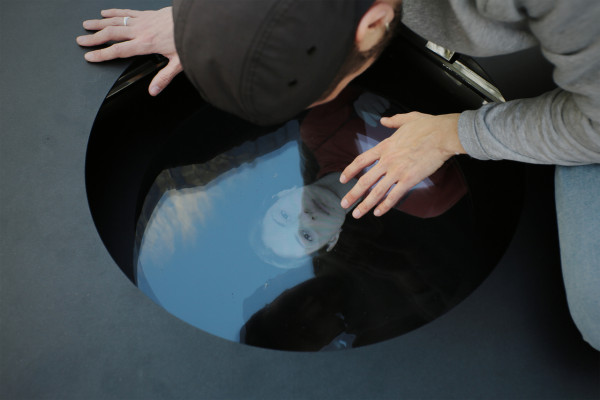
After creating her first play at BoCA 2017, “Endgame”—a cylindrical device made of scaffolding, which spectators inhabited at a height of 9 meters, and whose action took place inside—the artist now returns to Portugal for a new creation: the installation “Narciso,” presenting her work for the first time in Lisbon. “Narciso” evokes, following her recent intervention at Tate Modern (London), the crisis of migration and refugees. Through Tania Bruguera’s eyes, this movement takes on the expression of an individual crisis, centered on the body and identity of each viewer: “A person sits on a sculpture observing their reflection in the water. When they approach the water to see themselves, the reflection they find is not their own but that of an immigrant,” writes Tania Bruguera.
For this creation, Tania was inspired by a question posed by Alain Badiou in the prologue to “The Agony of Eros” by philosopher Byung-Chul Han: “Is it absolutely certain that the only way to oppose a consumerist and contractual conception of otherness is to abolish the ‘I’ on a sublime and all-impossible scale, in order to find the ‘Other’?” In the same book, Byung-Chul Han states that for human thought to exist, “it is necessary for a person to have been a friend and lover,” that is, to have given themselves to another.
Pordução